
Loading...
A wobbly or corroded railing is a safety hazard, and an unpermitted one can stall a home sale. We install deck railings built for South Florida's coastal conditions, with Broward County permits and inspections handled from start to finish.
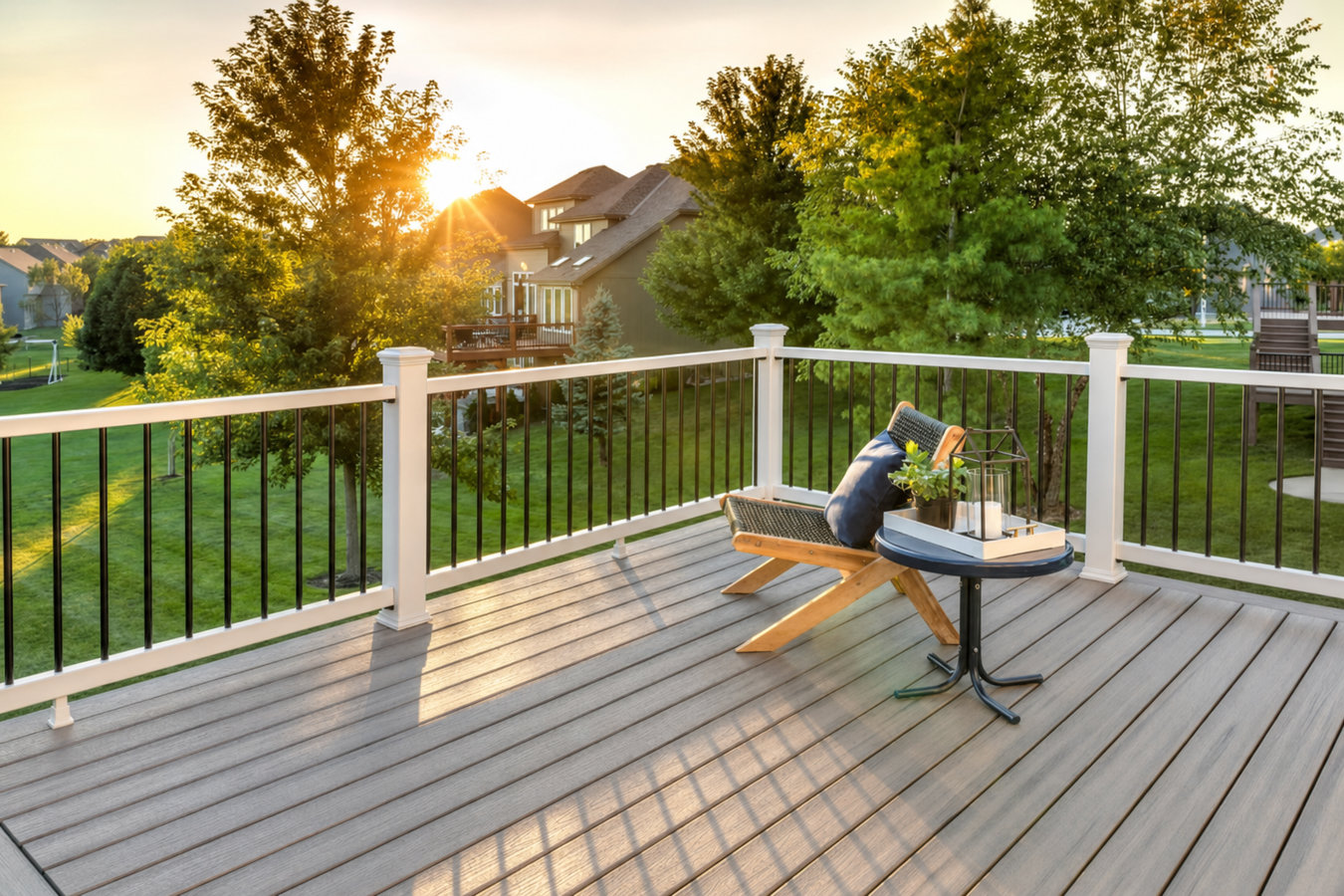
Deck railing installation in Oakland Park involves removing the old railing, anchoring new posts into the deck framing, and installing rails and balusters using hardware rated for coastal South Florida conditions - most standard deck railings are fully installed in a single day, with county inspection following within a few days after.
If your current railing moves when you push on it, shows rust streaks or a chalky white coating on aluminum, or has spindles that are cracked or missing, it is no longer doing its job - and in Oakland Park's salt air and humidity, surface deterioration often means the hardware underneath is weakening faster than it looks. Florida's building code requires a railing on any deck 30 inches or more above the ground, and Broward County requires a permit before installation or replacement begins. If your deck needs a full rebuild in addition to new railings, our multi-level decks or custom build service covers the entire project from footings to finish.
We handle the permit application, coordinate with Broward County for the required inspection, and give you a written estimate before any work begins - so you know exactly what you are agreeing to.
Stand at the railing and give it a firm push and pull. If it shifts, wobbles, or makes a creaking sound, the posts are no longer anchored securely. This is a safety hazard - especially if children or elderly family members use the deck regularly. A railing that looks intact but moves is failing at its only job.
In Oakland Park's salt-air environment, metal railings that were not built with corrosion-resistant materials deteriorate faster than you would expect inland. Rust running from screws or posts, or a chalky white coating on aluminum, means the protective finish has broken down and the structure underneath may be weakening.
Walk the length of your railing and look at the vertical pieces between the rails. If any are cracked, broken, or missing - or if the gaps between them look wider than about four inches - the railing no longer meets safety standards. A 4-inch gap limit exists specifically because of child fall risk, and inspectors check for it.
This is common on older Oakland Park homes where decks were built before current safety rules were in place. If you can measure 30 inches or more from the deck surface to the ground, Florida's building code requires a railing. A missing railing on a raised deck is also a liability concern if anyone is injured on your property.
We install deck railings in aluminum, composite, cable, and glass panel systems, with aluminum being our most recommended material for Oakland Park homeowners because of how it performs in coastal South Florida conditions. Every installation starts the same way: checking the condition of the existing deck framing before we anchor anything into it. Older homes in Oakland Park - many built in the 1960s and 70s - sometimes have framing that has softened from moisture exposure, and installing new railings on compromised framing does not make the deck safer. If we find structural concerns during the assessment, we stop and walk you through what we found before proceeding. Posts are anchored into the deck framing itself, not just the surface boards - that is the difference between a railing that stays solid for years and one that starts to loosen within a season. Any deck more than 30 inches above grade needs a railing under Florida's building code, and our installations meet those wind-resistance standards. If your deck needs a full redesign or expansion while you are at it, we can discuss that alongside a broader custom deck design and build project.
If your deck also needs a full rebuild - not just new railings - we can scope that as part of a multi-level deck project or single-level replacement. We will tell you honestly during the estimate visit which approach fits your situation.
The go-to choice for Oakland Park's coastal air. Aluminum does not rust, holds paint well, handles UV and heat, and requires very little ongoing maintenance.
Gives the appearance of wood without the rot, splintering, or annual sealing that wood requires in South Florida's wet climate. A good middle-ground option for homeowners who want a warm look.
Horizontal stainless steel cables between posts give an open, contemporary look that is popular on decks with views or pool surrounds. Requires corrosion-resistant hardware throughout.
Frameless or semi-frameless glass panels offer an unobstructed view and a polished finish. Best suited for decks where the view or aesthetic is a priority and maintenance is less of a concern.
Oakland Park sits a few miles from the Atlantic coast, which means the air carries salt particles year-round. Salt air accelerates corrosion on metal fasteners and finishes faster than most homeowners expect - a railing that would last 20 years in a dry inland city may need significant attention in 8 to 10 years if the wrong materials are used. That is why material and hardware selection matters more here than it does elsewhere, and why a contractor quoting a significantly lower price without explaining their material choices is worth questioning. Deck railings built from aluminum and stainless steel fasteners are the smart defaults in this environment. Florida's building code also sets higher wind-resistance requirements than most other states because of hurricane risk, and those requirements apply to railings as much as they do to roof connections - your posts need to be anchored to withstand real storm loads, not just hold up on a calm day.
We install railings on homes throughout the area, including in Wilton Manors and Fort Lauderdale, where the same salt-air conditions, HOA approval requirements, and Broward County permit processes apply. If your neighborhood has an HOA with railing style or color guidelines, we check those before ordering materials so the finished installation meets both the code and the association's requirements.
We ask a few quick questions - the size of your deck, whether you have an existing railing, and what you are hoping to achieve. An accurate estimate requires seeing the deck in person, so we schedule a visit before quoting.
We measure the deck perimeter, check the condition of the existing framing and decking boards, and walk through material options with you. You receive a written estimate - not just a verbal number - before any work is agreed to.
We apply for the Broward County building permit before work begins. This typically takes one to two weeks. We handle all the paperwork - you do not need to visit any office. Once approved, we schedule your installation day.
We remove the old railing, anchor new posts into the framing, and install rails, spindles, and hardware. The county inspector verifies the work, and we do a final walkthrough with you - push on the posts yourself and confirm everything feels solid before we leave.
We come out, check the condition of your existing framing, and give you a clear price in writing. No obligation. Most inquiries get a response within one business day.
The single biggest difference between a railing that stays solid and one that starts wobbling within a year is where the posts are anchored. We anchor posts into the deck framing itself - not the top layer of decking boards. That is the method that meets Florida's wind-resistance requirements and holds up to real use over time.
We specify aluminum railing systems and stainless steel hardware because those are the materials that perform in Oakland Park's salt air and humidity. A railing built with the wrong fasteners can start corroding from the inside out before the surface shows any visible wear - we do not let that happen.
Every railing installation we do goes through the proper Broward County permit and inspection process. That means an independent county inspector verifies the anchoring and spindle spacing before the job is closed out. Your railing becomes part of your home's documented record, with no questions at resale.
Your written estimate covers the full scope. If we find damaged framing under an old railing once we start removing it, we stop, show you what we found, and talk through options before continuing. You decide how to proceed - we do not add charges without your sign-off.
The Consumer Product Safety Commission (cpsc.gov) publishes deck safety guidelines covering baluster spacing, railing height, and post anchoring standards - all of which are checked during a Broward County inspection. We build to those standards on every project, which means you have both a county sign-off and independently published safety criteria confirming the work is done correctly.
If your deck needs more than new railings - a full redesign, additional levels, or a connected outdoor structure - our custom build service covers the entire scope from design through final inspection.
Learn MorePlanning a new multi-level deck means planning the railing system from the start - we build both together so every level meets Florida's height and wind-resistance requirements.
Learn MoreHurricane season fills permit queues fast - lock in your installation date now and we will handle the Broward County paperwork from start to finish. Call or send a message and we will respond within one business day.